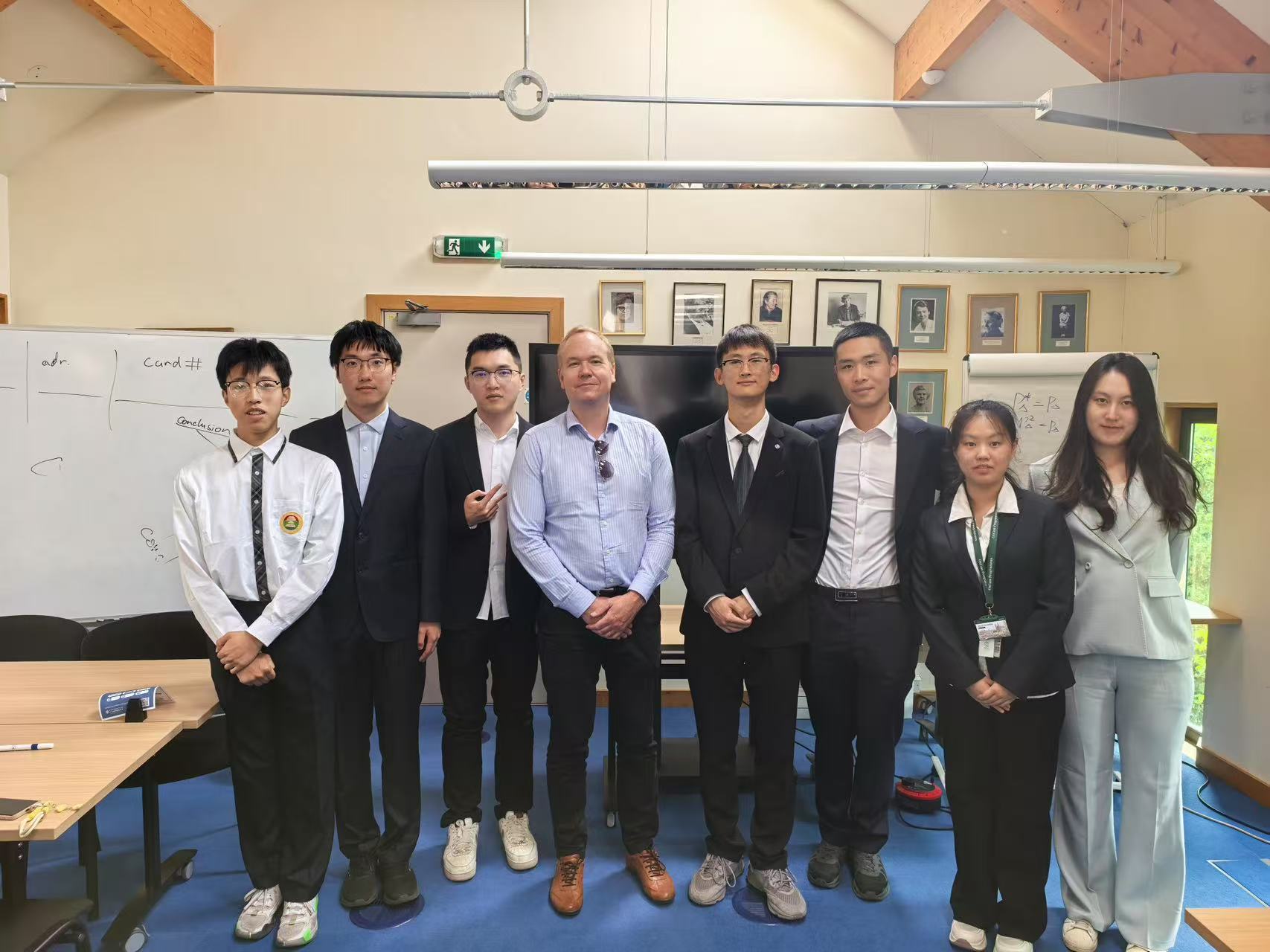
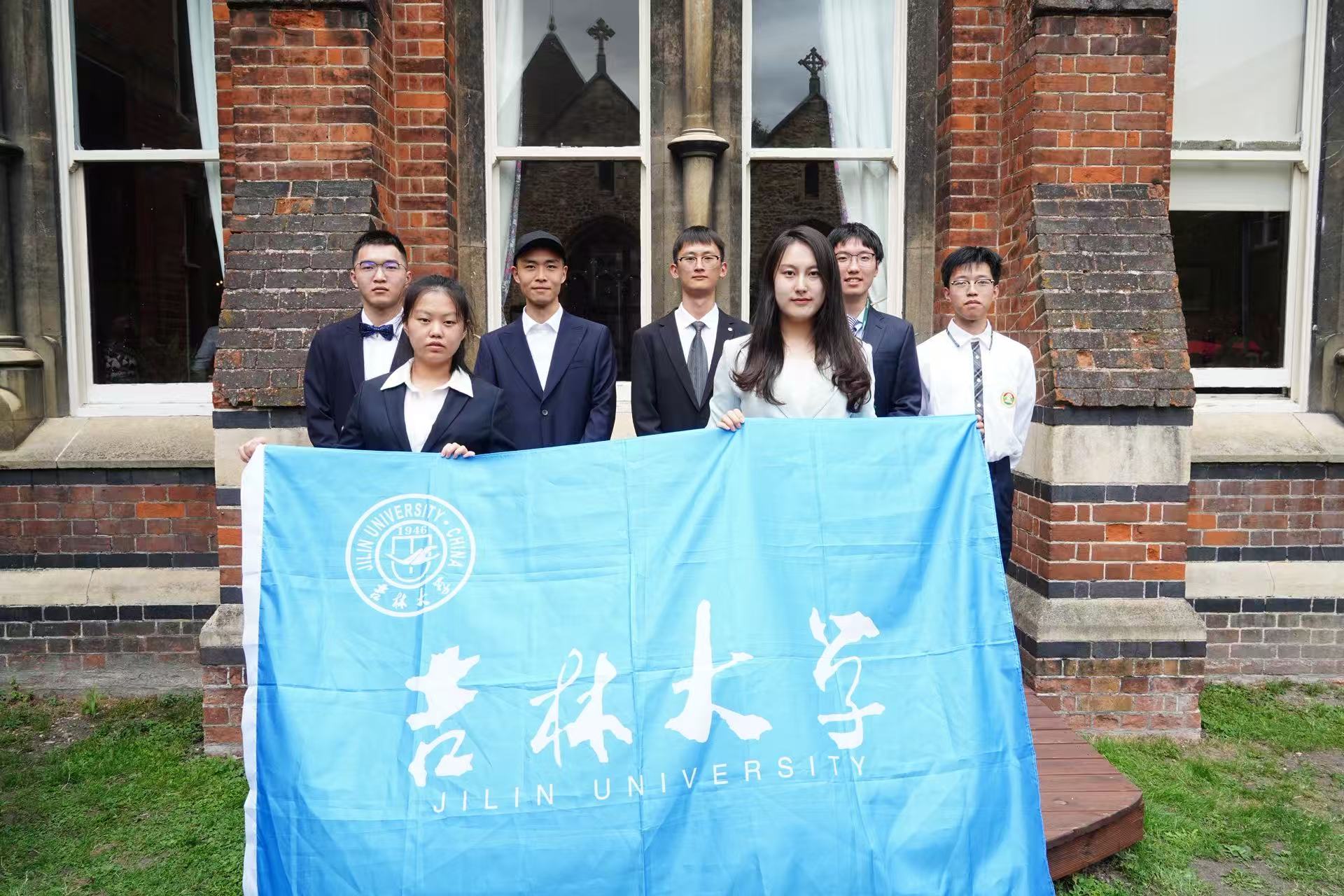
To promote the in-depth development of cultivating top talents in fundamental disciplines, emphasize nurturing students' international perspectives and global thinking, and guide students to actively explore cutting-edge topics in their fields, our institute sent 7 undergraduate students and 1 accompanying teacher to participate in the "2025 Cambridge Summer Academic Program – Mathematical Methods in Artificial Intelligence". The program took place from July 28 to August 11, 2025, lasting 15 days, bringing together students from Jilin University, Southeast University, East China University of Science and Technology, Beijing University of Posts and Telecommunications, Shantou University, and the University of Cambridge.
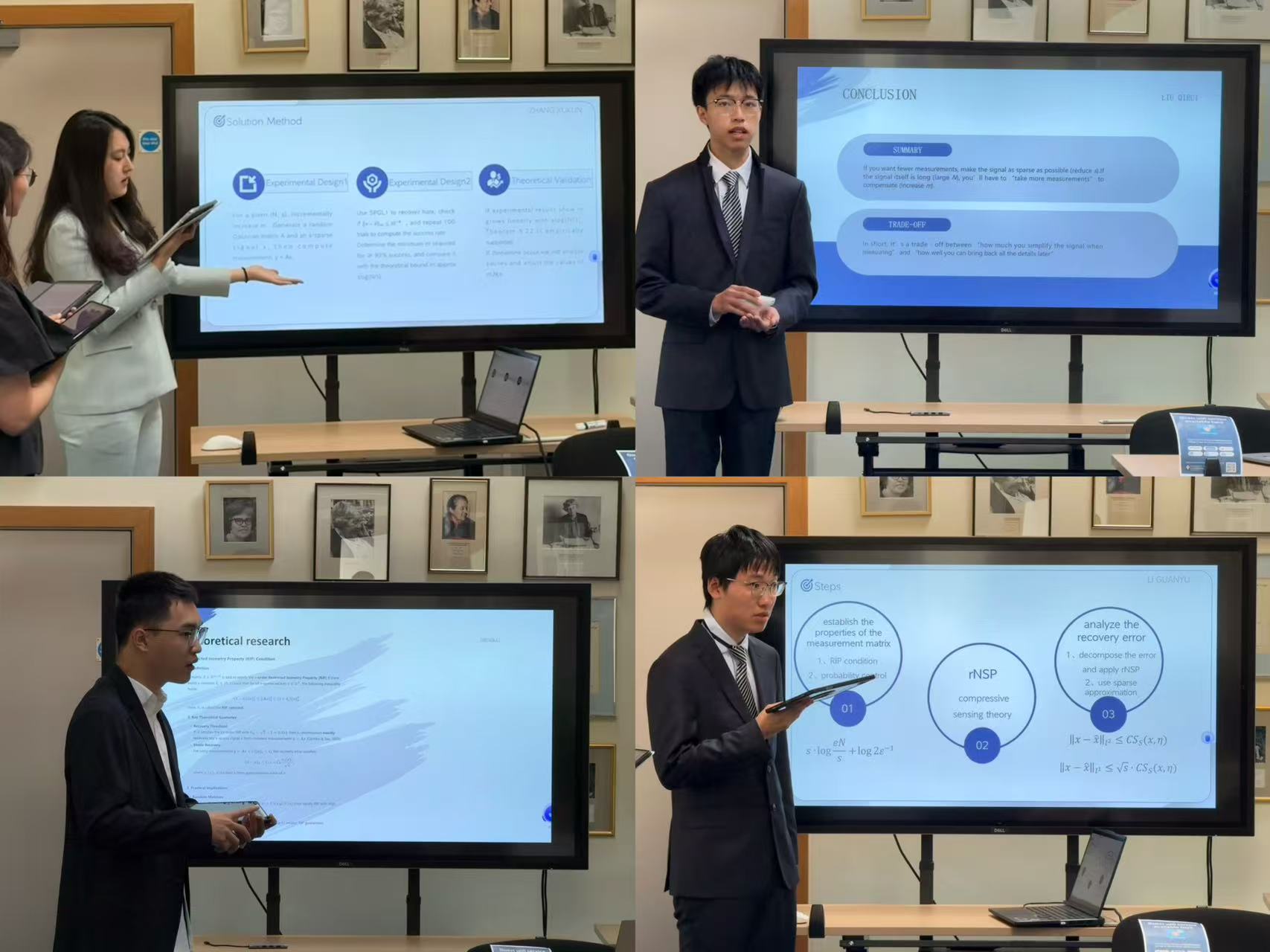
This summer school primarily adopts an immersive learning approach that combines specialized theoretical courses, group supervision, project research discussion classes, thematic academic seminars, master lectures, and group workshops. Focusing on core areas of mathematical methods in artificial intelligence, it offers two specialized courses: Abstract Algebra and its Applications in Communication Systems, and Artificial Intelligence Applications and Challenges from a Mathematical Perspective. Complementary targeted exercises and research assignments are designed for these courses, aiming to deepen students' understanding and practical application abilities in mathematics and interdisciplinary fields, cultivate their cross-cultural academic communication skills, broaden the global perspective of mathematical research, and comprehensively and systematically enhance students' overall academic competence and competitive potential.
The Department of Mathematics at the University of Cambridge is one of the world's leading institutions for mathematical education and research. Established in the early 19th century, it consists of the Department of Pure Mathematics and Mathematical Statistics (DPMMS) and the Department of Applied Mathematics and Theoretical Physics (DAMTP). In the 2024 QS subject rankings, it is ranked first in the UK and second in the world. The department has nurtured outstanding mathematicians such as Stokes, has produced significant achievements at the intersection of mathematics and AI, and has made interdisciplinary collaborations that have driven breakthroughs in fields such as healthcare and big data. Its affiliated institutions have tools that are widely applied in finance, life sciences, and other areas.
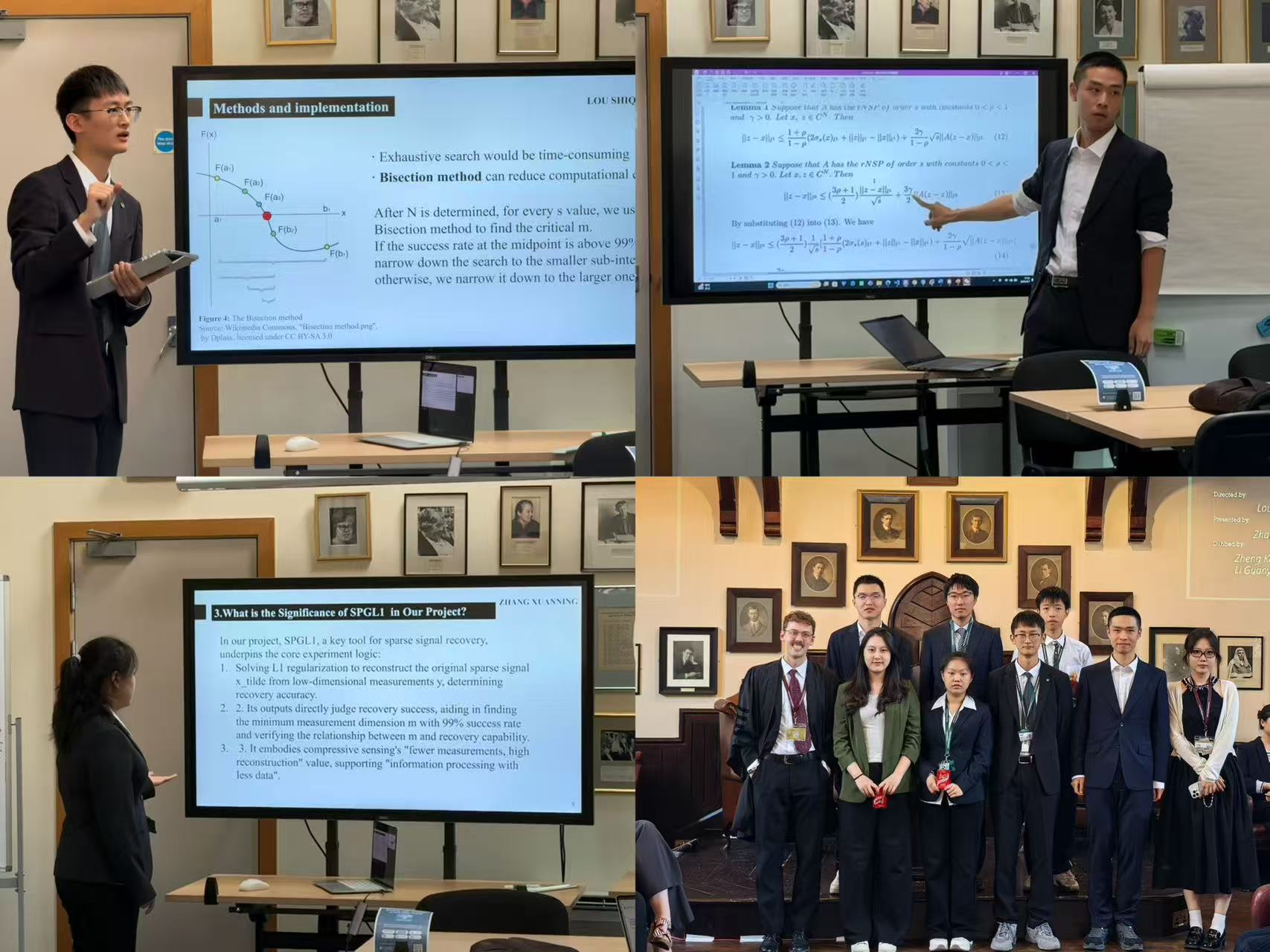
During this summer school program, Professors Jossy Sayir and Anders Hansen from the University of Cambridge delivered meticulously designed teaching content. In the classroom, the professors conveyed specialized knowledge such as abstract algebra and algorithm reliability in a clear and accessible manner. Through Cambridge's distinctive "Lecture Supervision" model, students were guided to explore these concepts in depth by connecting them with practical scenarios such as communication system coding and medical AI, creating a lively and harmonious atmosphere for teacher-student interaction. Complementary group workshops and research projects effectively helped students consolidate theoretical knowledge and enhance practical application skills, while teamwork allowed them to further deepen their understanding of the course content. During the program, students and professors actively engaged in cross-cultural academic exchanges with local scholars and students through activities such as Fellow Seminars and Fellow Activities, broadening their academic horizons and communication channels. In the later stages of the project, students completed their project presentations in groups for the Final Evaluation. Upon passing the assessment, they participated in the closing ceremony, successfully graduated, and received official certificates signed by the teaching professors along with a report of their project results.
The successful conclusion of this international summer school has established a high-quality, international learning and exchange platform for participating teachers and students. By sharing top-tier educational resources and engaging in in-depth cross-cultural interactions, students' academic foundations and global perspectives have been genuinely expanded, laying a solid basis for long-term collaboration and in-depth exchanges in the field of mathematics. The project outcomes can serve as strong evidence of students' academic capabilities, supporting their further education and development needs. It holds significant practical importance and long-term value for promoting the internationalization of the discipline and cultivating top mathematics talents with global competitiveness.